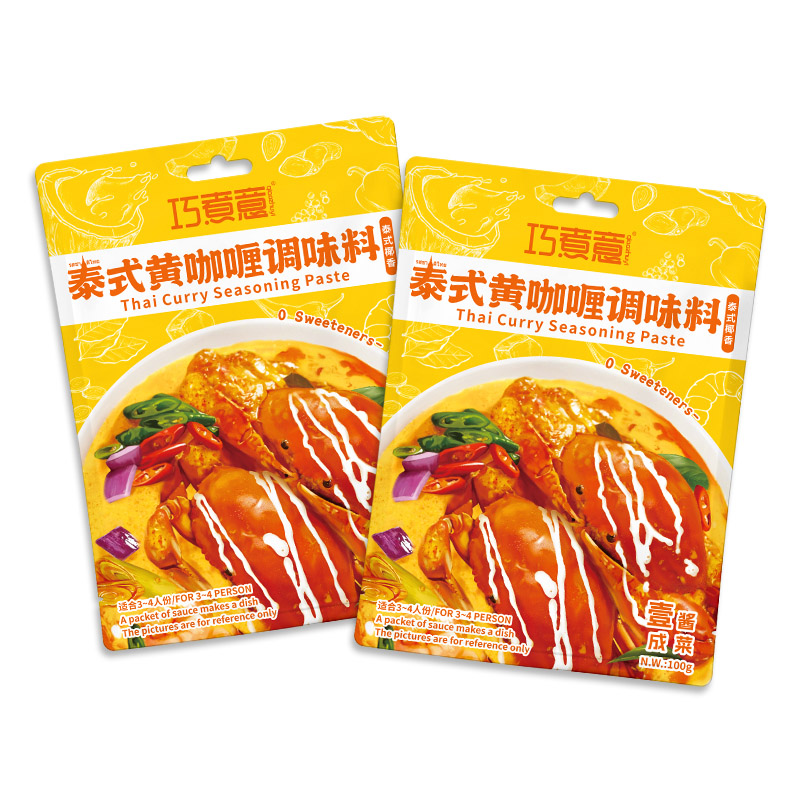
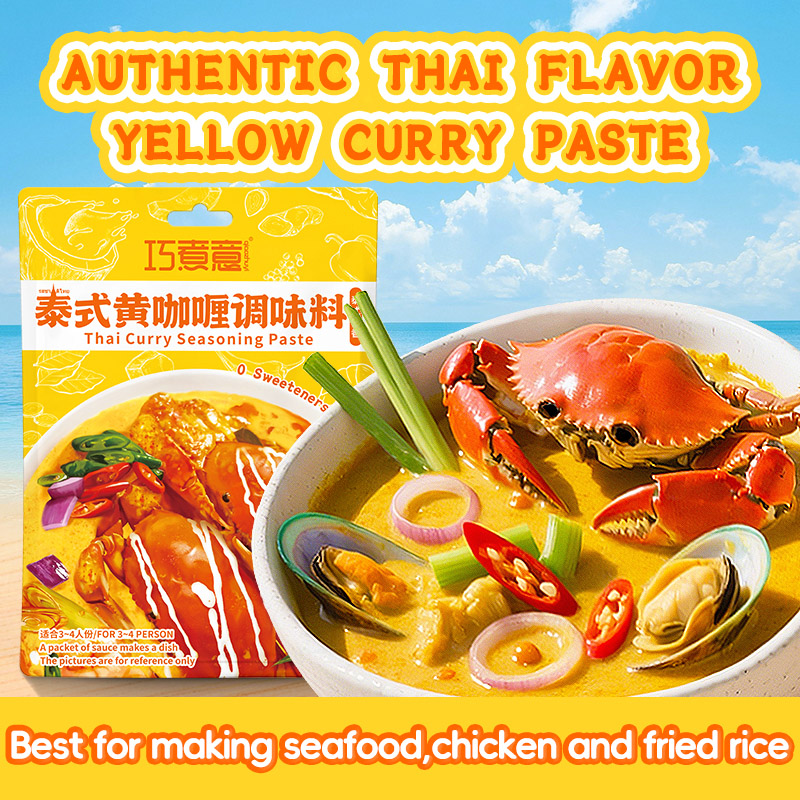
Authentic Flavor Thai Curry Seasoning Paste,Seasoning Sauce Thailand
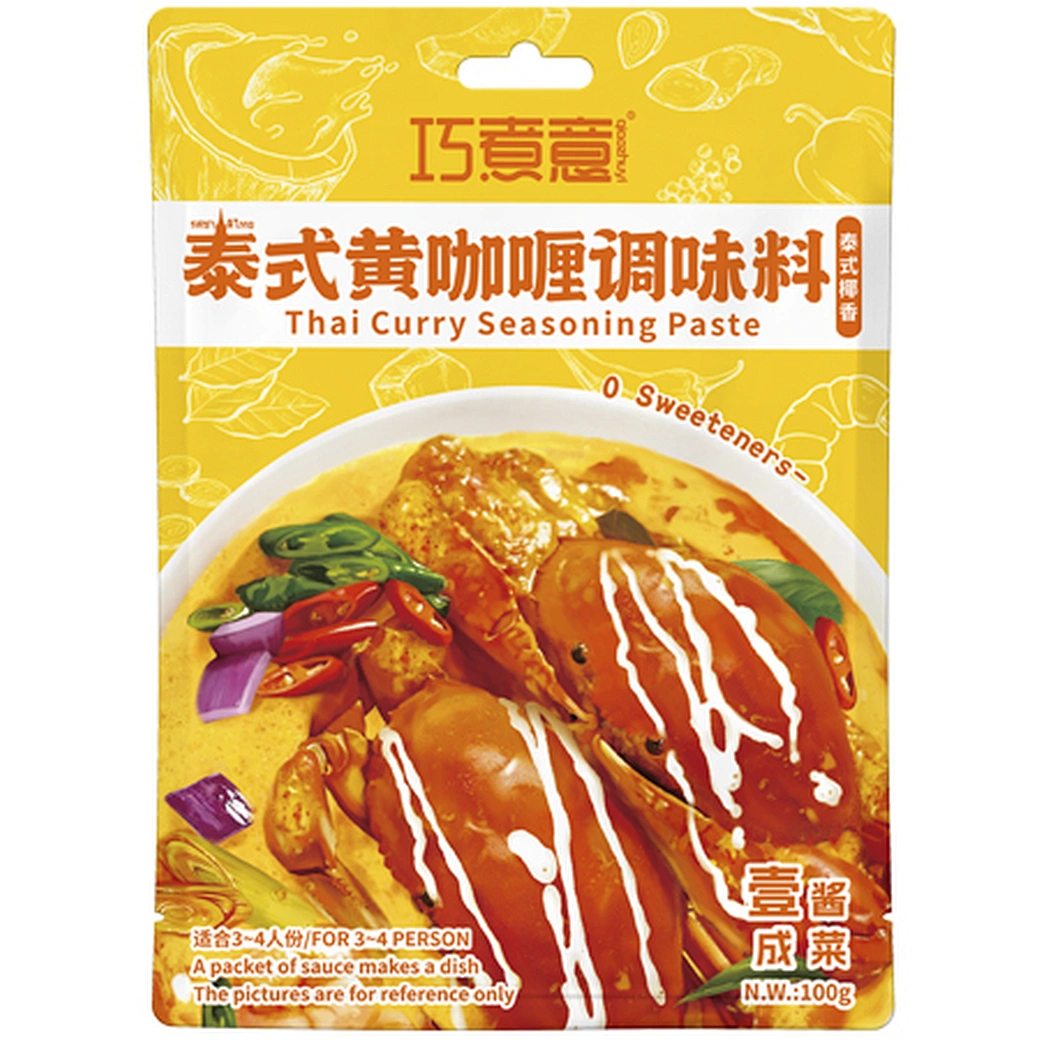
Thai Curry Seasoning Paste helps food manufacturers, restaurant chains, and ready-meal producers deliver a consistent Thai yellow curry flavor across different products and production batches.
As demand for convenient meals and international flavors grows, businesses need seasoning solutions that simplify production while maintaining the desired taste.
Standardized formulations can reduce recipe variations, improve manufacturing efficiency, and support product development for different markets. Qingyuan Grandtop Foods Seasoning Factory is a professional seasoning supplier of various compound seasonings in China, providing customized seasoning solutions for food businesses seeking reliable flavor development and scalable production.
1.What Defines an Authentic Thai Yellow Curry Flavor?
Thai yellow curry is known for its balanced combination of curry spices, aromatic ingredients, savory notes, and moderate heat. Depending on the recipe, its flavor may include turmeric, coriander, cumin, garlic, shallot, and other spices. Coconut milk or coconut cream is often used in finished dishes to create a smooth texture and rounded taste.
For commercial food production, reproducing this flavor requires more than selecting the right ingredients. Manufacturers need a formulation that works consistently in their intended applications.
For example, a curry sauce for ready meals may require a different flavor intensity from a seasoning used in meat marinades or instant food products. The final taste also depends on the base ingredients, cooking method, and serving format.
A well-developed Thai Curry Seasoning Paste can help manufacturers establish a recognizable flavor profile while allowing adjustments for different product requirements.
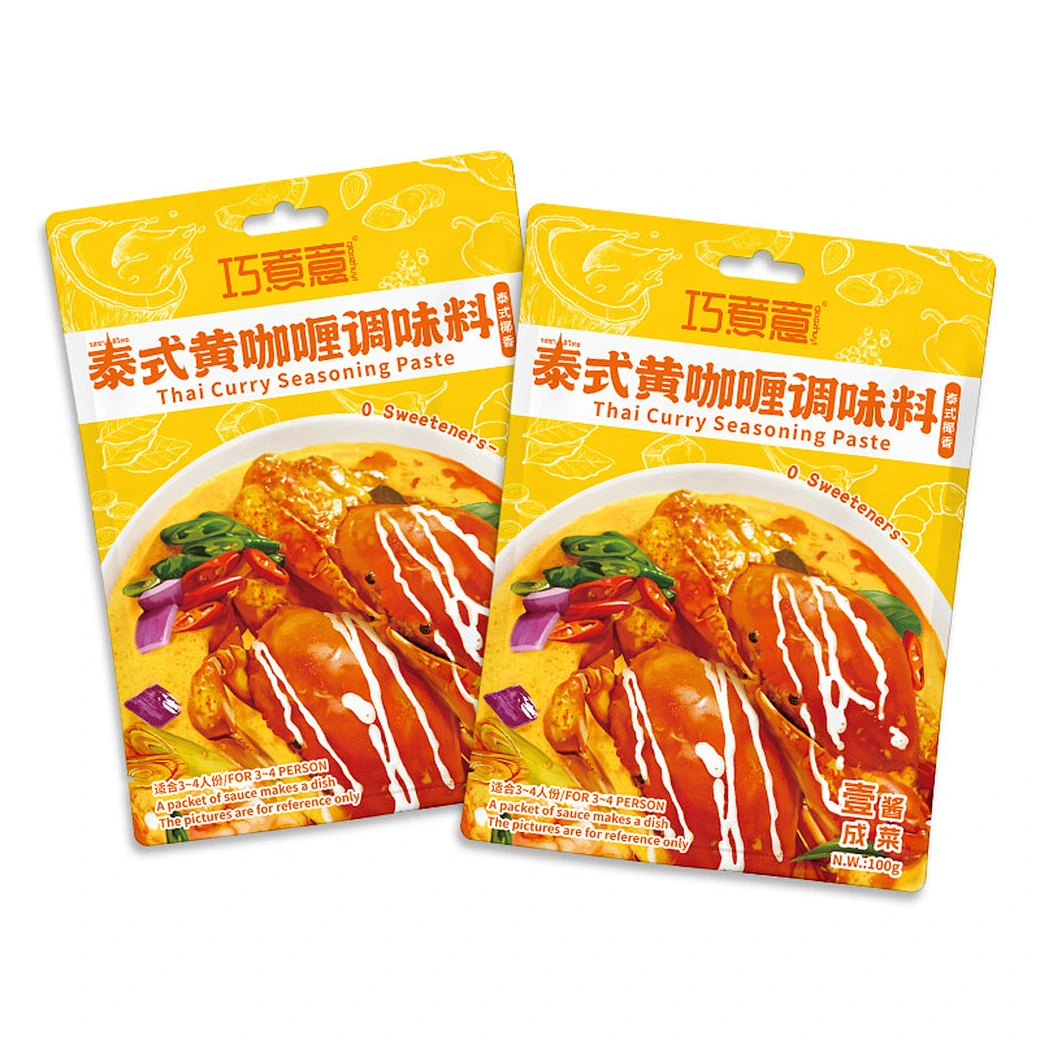

2. Why Is Thai Curry Seasoning Paste Difficult to Standardize?
Moving from a restaurant recipe to industrial production presents several challenges.
| Raw material variation: Spices can differ in aroma, color, and intensity between suppliers and batches. These differences may affect the final curry flavor. |
| Recipe consistency: When production relies on separately measured ingredients, small differences in weighing or mixing can change the taste of the finished product. |
| Processing conditions: Heating, mixing, and storage may influence flavor retention and product stability. A formulation must be evaluated under the actual processing conditions. |
| Different application requirements: A curry sauce, frozen meal, instant noodle product, and meat preparation may require different seasoning concentrations and flavor balances. |
3.How Standardized Seasoning Sauce Supports Commercial Production
| First, a defined formulation provides a consistent starting point for each production batch. Manufacturers can establish the target aroma, color, savory profile, and heat level instead of relying entirely on manual seasoning adjustments. |
| Second, a prepared seasoning solution can simplify ingredient handling. Depending on the formulation, it may reduce the need to weigh and mix numerous individual spices at the production site. This can make production easier to manage and help reduce preparation time. |
| Third, standardized formulations support product development across multiple food categories. A company may use a related Thai curry flavor profile in prepared meals, curry sauces, meat products, or foodservice applications, with adjustments for each product |

4.Adapting Thai Yellow Curry Flavor for Global Markets
|
Southeast Asia:
Manufacturers may focus on maintaining recognizable Thai curry characteristics while adapting the flavor to the requirements of specific product categories
|
|
Africa and the Middle East:
Buyers may request adjustments to spice intensity, saltiness, savory notes, or other flavor characteristics. Ingredient and certification requirements should also be confirmed for each destination market
|
|
Europe and North America:
Thai curry flavor can be developed for ready meals, sauces, frozen foods, and convenience products. Manufacturers should evaluate the balance of spice, aroma, and richness within the finished recipe
|
|
Retail and foodservice:
Retail products may require convenient preparation and consistent results for consumers. Foodservice and industrial products may place greater emphasis on batch consistency, application efficiency, and packaging suited to frequent use.
|

5.Customized Thai Curry Seasoning Solutions from Qingyuan Grandtop Foods
For buyers developing Thai Curry Seasoning Paste or related Thai yellow curry seasoning sauces, customization can begin with the intended application and target flavor profile.
| Flavor development: Buyers can communicate their preferred curry aroma, spice intensity, savory balance, and other requirements for formulation evaluation. |
| Application-based solutions: Seasoning requirements can be assessed for curry sauces, prepared meals, meat products, instant foods, and foodservice applications |
| OEM and private-label cooperation: Businesses developing their own food brands can discuss customized seasoning formulations and packaging requirements. |
|
Packaging options:
Bulk or other application-appropriate packaging can be discussed according to the product specification, order quantity, and customer needs.
|
This process helps buyers assess whether a seasoning solution meets their commercial requirements before proceeding to larger orders.
6.How to Choose a Reliable Thai Curry Seasoning Paste Supplier
Selecting a supplier involves more than comparing prices. Buyers should evaluate the supplier's ability to support consistent quality and long-term production.
|
Formulation capability:
Confirm whether the supplier can adjust the flavor profile and evaluate the seasoning in the intended food application.
|
|
Quality control:
Ask about raw material specifications, batch records, quality checks, and procedures for handling product variations.
|
|
Production capacity:
Ensure that the supplier can support expected order volumes and discuss production lead times before confirming a purchasing plan.
|
|
Documentation and compliance:
Review ingredient declarations, allergen information, applicable food safety documentation, and destination-market requirements. Any certification or regulatory claim should be verified for the specific product and facility.
|
|
Sampling and communication:
Agree on sample approval criteria, packaging specifications, order quantities, and delivery arrangements before mass production.
|
7.FAQ About Thai Curry Seasoning Paste
Q1: What is Thai Curry Seasoning Paste used for?
Q2: How can manufacturers maintain consistent Thai yellow curry flavor?
Q3: Can Thai Curry Seasoning Paste be customized for different markets?
Q4: What is the difference between Thai curry seasoning paste and Thai curry seasoning powder?
Q5: Can Qingyuan Grandtop Foods provide customized Thai curry seasoning solutions?
Q6: What should buyers confirm before purchasing Thai Curry Seasoning Paste in bulk?
Developing a commercial Thai yellow curry product requires a balance between flavor authenticity, formulation consistency, processing performance, and market requirements.
Standardized Thai Curry Seasoning Paste can help food manufacturers simplify seasoning operations and reproduce their target flavor more reliably across production batches.
For food brands, importers, restaurant chains, and ready-meal manufacturers, choosing a suitable seasoning partner is an important step in product development.
Qingyuan Grandtop Foods Seasoning Factory welcomes inquiries about customized compound seasoning solutions, flavor development, and packaging requirements.
Contact Qingyuan Grandtop Foods Seasoning Factory to discuss your Thai Curry Seasoning Paste project and develop a seasoning solution suited to your product and target market.E-mail: info@grandtopfoods.com, WhatsApp: +86 18026352291.

Polvo chino del condimento del Bbq, condimento al por mayor de la parrilla de la barbacoa
Artículo relacionado